La Garenne-Rancy
Journey to the End of the NightLa Garenne-Rancy is the impoverished Parisian suburb where Ferdinand Bardamu practices medicine among people seeking treatment and, often more urgently, the possibility of a pension. Its daily poverty shapes both his work and his bleak understanding of what medical care can offer. After his practice falters and he falls seriously ill, he leaves without telling his neighbors; later, a chance return to its outskirts draws him back toward the Henrouille family and the troubles he had hoped to leave behind.
Setting and Social Conditions
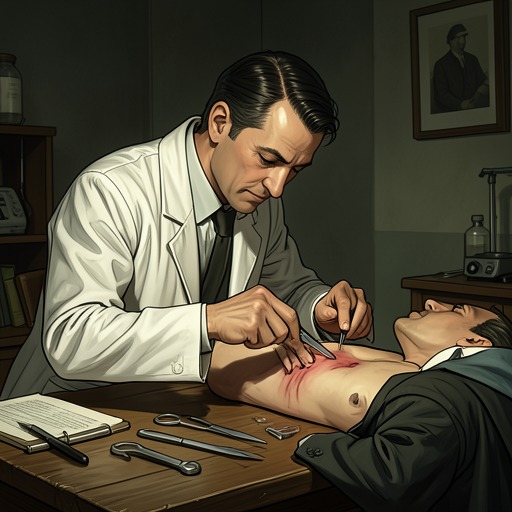
Bardamu’s dispensary serves residents of the Zone, a poor settlement where mud, refuse, and makeshift paths frame everyday life. The people who come to him are not simply patients in need of cures: many hope that evidence of tuberculosis will help them obtain a government pension. They have been periodically rejected for military service on the basis of their sputum, and continue working despite fever, inadequate food, and recurring illness. In their calculations, a small, uncertain income may matter more than recovery. The waiting and uncertainty are part of the neighborhood’s condition, not an incidental backdrop to its medical life.
The dispensary brings Bardamu only eight hundred francs a month. He says he performs no miracles, though miracles are badly needed, and the patients are not necessarily seeking one. Their attention is fixed on qualifying for support, while their illness and poverty persist. The exchange is therefore unequal in a distinctive way: Bardamu has the authority to examine and treat, but neither he nor the medical system can readily supply the security his patients want. Their hope gathers around a pension whose value is small but whose promise is decisive.
Bardamu’s Practice and Decline
Bardamu’s position in La Garenne-Rancy becomes increasingly precarious after Robinson leaves. He expects that Robinson’s departure might bring more patients, but the hoped-for increase does not come. A slump and unemployment reduce activity in the area, and the mild, dry winter brings no epidemic to increase demand for medical care. Bardamu notices colleagues making rounds on foot to save money by leaving their cars at home. His own circumstances are no more secure: he wonders whether his persistent cold comes from going out in only a raincoat, eating too little, or the return of his fevers.
Just before spring, his condition worsens into a severe, persistent cough. One morning he cannot get out of bed. Bébert’s aunt happens to pass by, and Bardamu sends her to collect a small bill still owed to him in the neighborhood. He recovers only half of it, an amount that supports him for ten days in bed. The episode makes the fragility of his livelihood concrete: one outstanding local payment is both his last available resource and the measure of how little protection his practice provides.
Leaving the Suburb
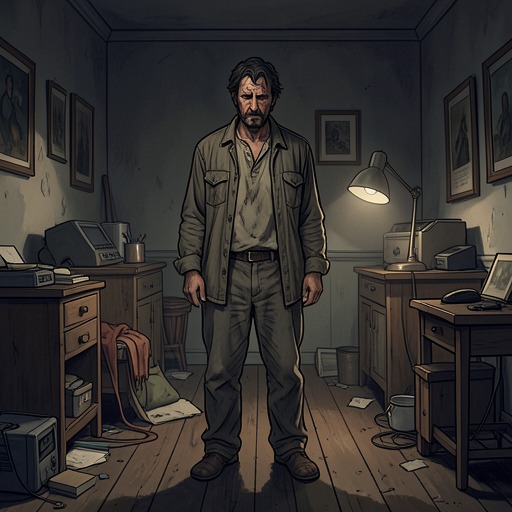
During those ten days in bed, Bardamu decides to leave La Garenne-Rancy. He has not paid rent for six months and expects to abandon the few pieces of furniture in his mezzanine room. Rather than announce his departure or leave an address, he plans to disappear quietly. His medical qualification could let him practice elsewhere, but he does not imagine that a new place will ultimately be safer or better. It may offer a brief respite while he is unknown; once people learn where he is vulnerable, he expects the familiar hardships to resume.
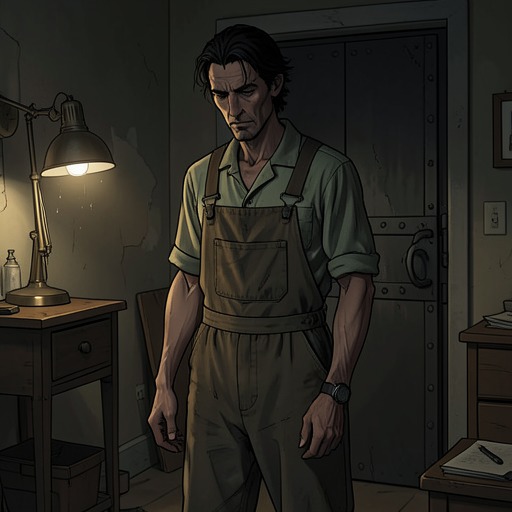
He carries out the departure without ceremony. As he passes the concierge’s lodge for the last time, the residents are gathered over wine and chestnuts; they do not notice him. Bardamu takes their failure to see him as a form of release: fewer people know where he is, and therefore fewer can watch or harm him. That sense of freedom is shadowed by his image of entering the unknown, a tunnel without an evident end. Leaving the suburb changes his location, but not his expectation that poverty and social exposure will catch up with him elsewhere.
Return and Narrative Significance
Later, after losing track of Pomone, Bardamu finds himself near La Garenne-Rancy and looks across the fortifications. From a distance, its cemetery trees make the suburb resemble the Bois de Boulogne, a view that briefly disguises the hardship he remembers. He tells himself that the Henrouilles may know what is happening in Toulouse and considers paying them a visit. The decision is a mistake: he recalls that some people should not be revisited, and that even a small action can set disaster in motion.
Drawn by habit toward the Henrouilles’ house, Bardamu sees that it remains where it was. In the rain, with no one else in the street, he hesitates and begins to turn back. The daughter-in-law opens the door, recognizes him across the street, and calls him by name, insisting that he come inside. La Garenne-Rancy thus returns not as a secure home but as a place whose familiar social ties can pull him back toward unresolved affairs. Its contrast between distant appearance and remembered deprivation echoes Bardamu’s broader experience: departure can offer a short interval of anonymity, but it does not amount to escape.